Jebel Akhdar: the Green Mountain
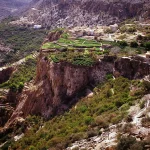
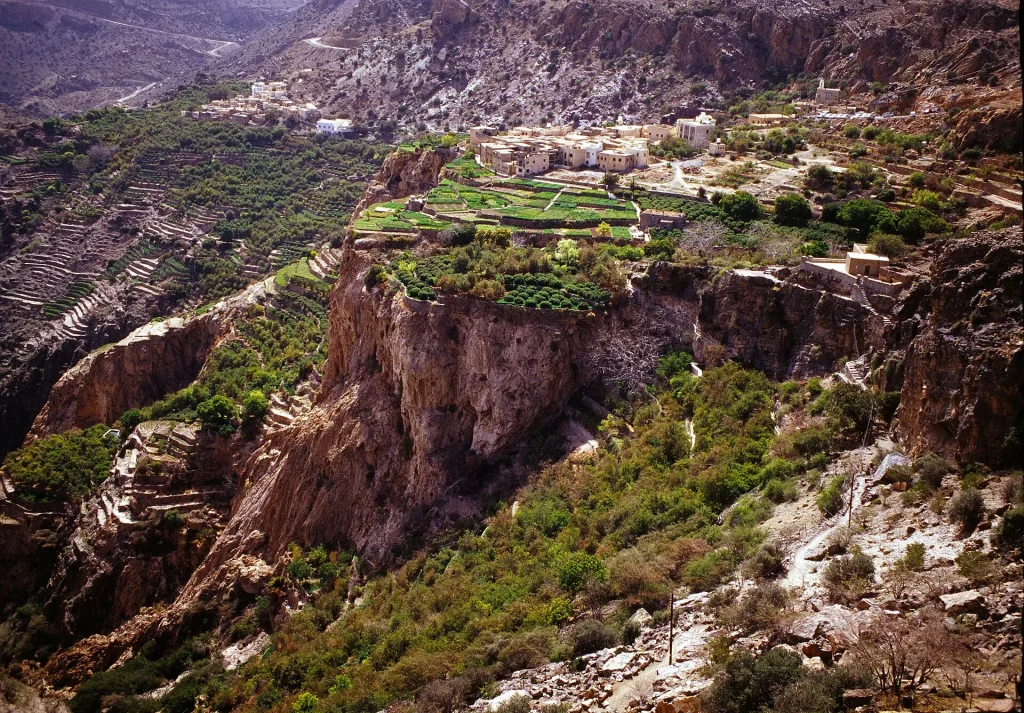
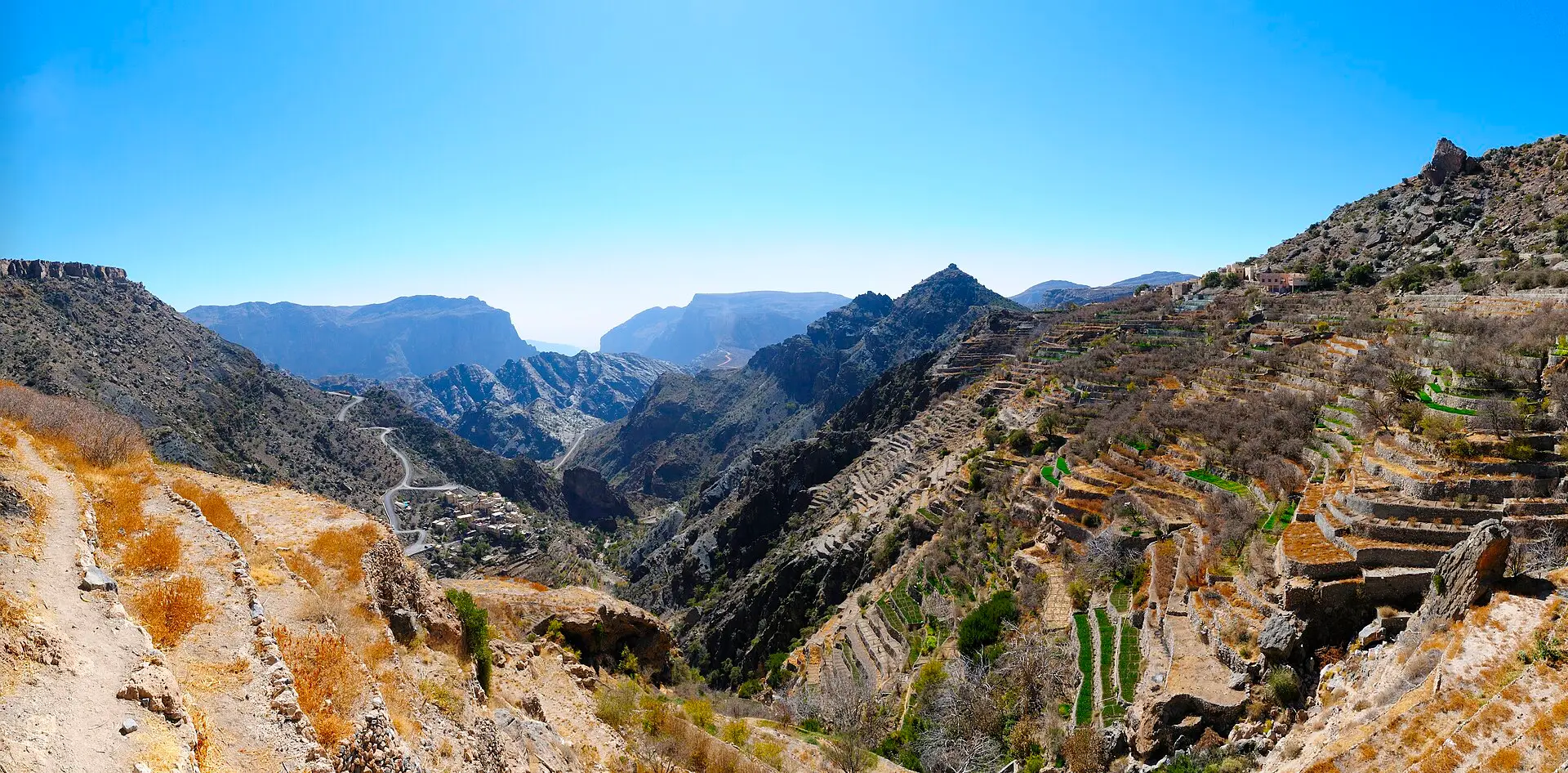
At around 2,000 metres above sea level, the Saiq Plateau of Jebel Akhdar feels like another world. The air is cool, and ancient villages cling to the edges of deep canyons. Terraced gardens grow pomegranates, walnuts, apricots and the famous Damask roses used to make Omani rosewater.
It is the perfect escape from the heat of the coast and one of the most scenic regions in the country.
Top things to see and do
- The village trail: Walk the easy path linking the old villages of Al Ain, Al Aqar and Saiq through terraced gardens and along falaj channels.
- Diana’s Viewpoint: Enjoy one of the most famous views in Oman, especially at sunrise.
- Rose season: In spring, the terraces turn pink. Visit a traditional rosewater distillery to see how it is made.
- Pomegranate season: In late summer the trees are heavy with fruit, and fresh juice is sold in the villages.
- Stay overnight: Mountain resorts and guesthouses offer stunning canyon views and cool nights.
Best time to visit
Jebel Akhdar is pleasant all year round. Summer temperatures are much cooler than in Muscat. The rose harvest is usually in March and April. Winter nights can be cold, sometimes near freezing, so pack warm layers.
Getting there
The plateau is about 2.5 hours by car from Muscat via Birkat al Mouz, near Nizwa. A police checkpoint at the foot of the mountain only allows 4×4 vehicles to drive up the steep road, so travelling with us or in a rented 4×4 is essential.
Travel tips
- Bring a warm jacket from November to February.
- The village paths are narrow and have some steps, so wear good walking shoes.
- Respect private gardens and homes, and stay on the marked paths.
-
- Photo: Ketan Mehta / Wikimedia Commons, CC BY-SA 3.0

-

- Photo: Philipp Weigell / Wikimedia Commons, CC BY 3.0
-
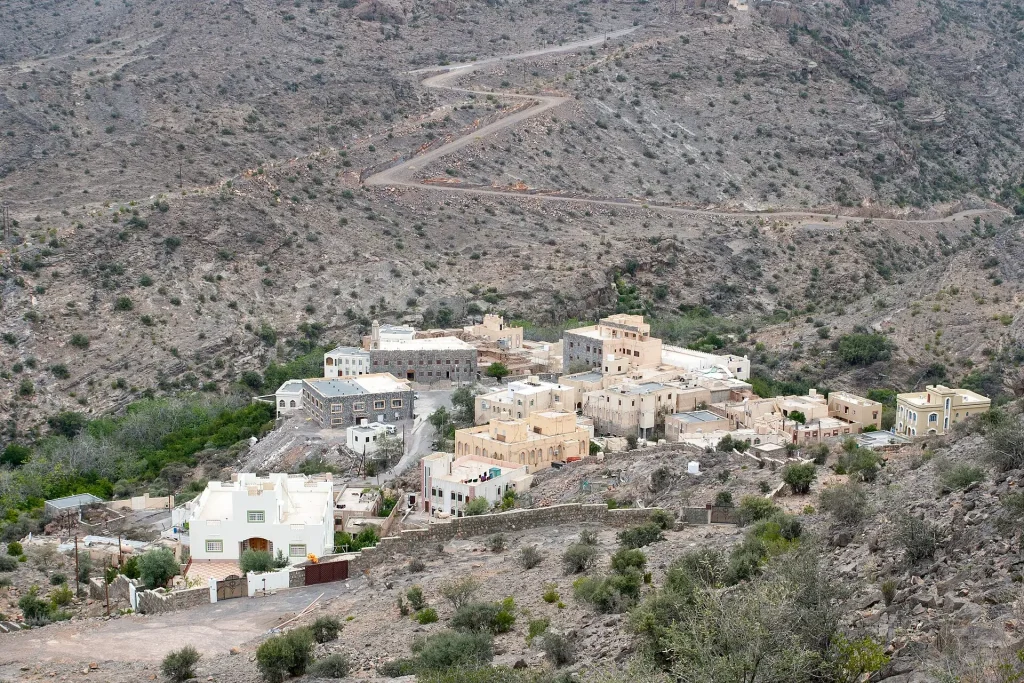
- Photo: Ekrem Canli / Wikimedia Commons, CC BY-SA 4.0
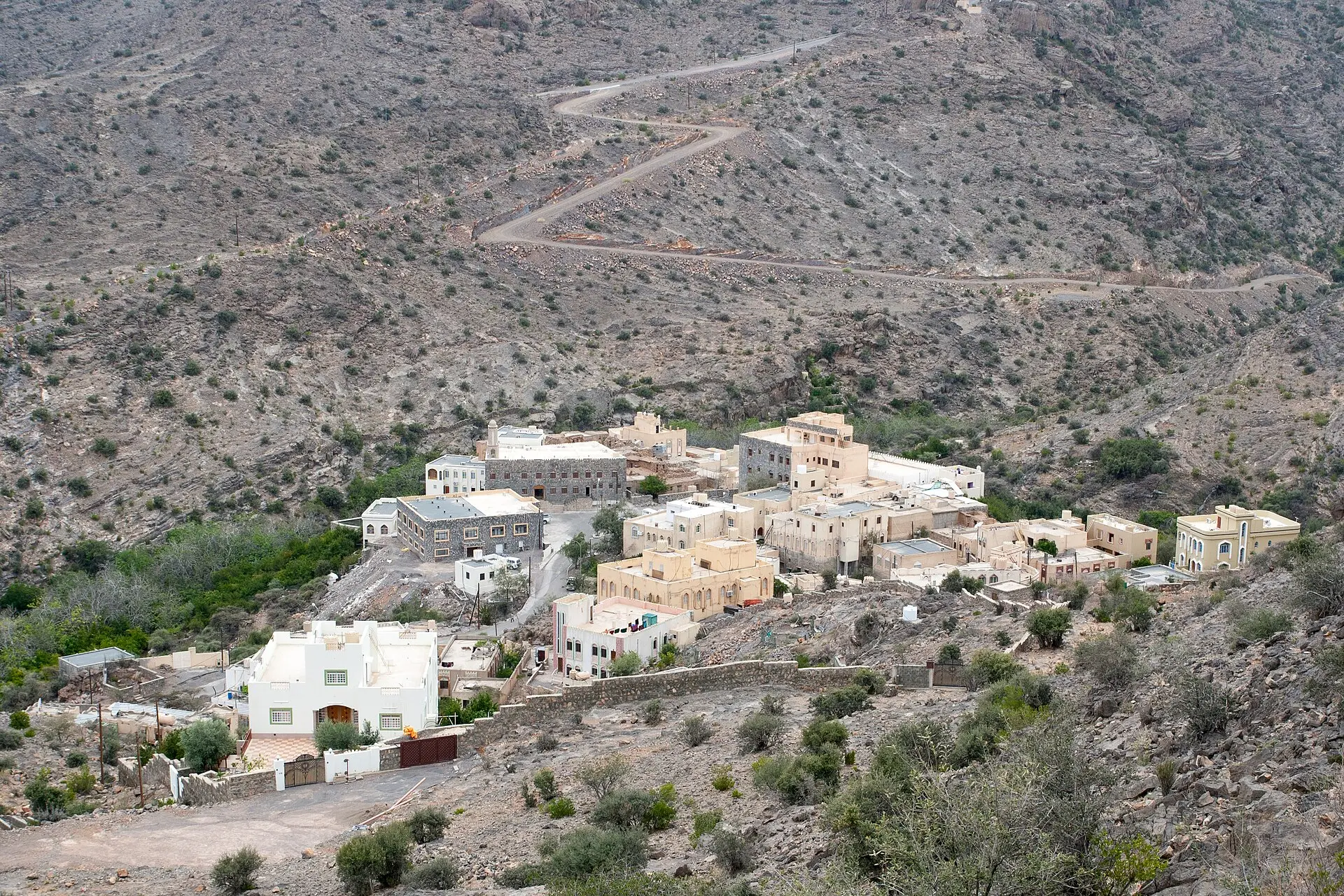
Explore Jebel Akhdar with Gotour
Join a private tour with a local guide, or combine Jebel Akhdar with other highlights of Oman on a multi-day trip. See our tours or contact us to plan your trip.
Photos: Robert Haandrikman (CC BY 2.0), Ketan Mehta (CC BY-SA 3.0), Philipp Weigell (CC BY 3.0) and Ekrem Canli (CC BY-SA 4.0), via Wikimedia Commons.